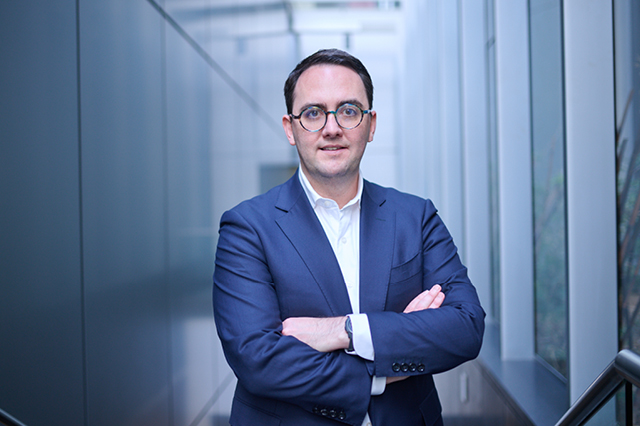


Shaping what's next
Lisa Zhou on private capital's influence on financing trends

Lisa is a partner in our Banking & Finance practice, with a focus on helping clients navigate the increasingly complex world of finance across a range of sectors, including renewable energy, infrastructure, real estate and healthcare.
The evolution of private capital funding across a number of sectors in the Australian market has been fascinating from a finance perspective. What’s really interesting is how private capital investors are bringing their relationships with financiers and co-investors into the mix. We have seen an increasingly diverse pool of investors and financiers in a number of sectors, including private credit and other non-traditional financiers, than we’ve traditionally seen in the Australian debt market.
This has been an enabler of greater flexibility in financing terms and structures. As a result, we are seeing a range of different financing products and approaches merging in certain transactions.
Digital infrastructure is a prime example of this trend. Assets such as data centres don’t fit neatly into a single framework given they typically have unique cash flow profiles, revenue models and expansion trajectories. A hyperscaler-driven model – involving a purpose-built site for cloud service providers with longer dated revenue contracts – looks very different from an enterprise or co-location model, where the data centre may be servicing the storage needs of multiple individual customers with shorter term contracts.
Those differences, combined with features such as the identity and strength of the sponsor, the development stage of the asset, the size, scale and number of assets, and capex requirements that often evolve over a relatively long time horizon, mean that risk allocation and financing needs are bespoke. This creates significant opportunities for tailored funding solutions to be provided by a range of investors and financiers, including commercial banks, private credit and other non-traditional lenders. From a debt perspective, we are seeing sponsors and borrowers seek flexibility to draw on concepts from a range of financing products and techniques, including project, leveraged and corporate finance, all within the one transaction. This represents a significant shift from the traditional lending model where there is a clear delineation between financing products and techniques for any one deal.
There's also a number of interesting synergies between digital infrastructure and the energy transition. Data centres, in particular, have potential to play an important part in addressing key hurdles in Australia's renewable energy roll out. Data centres are predicted to consume anywhere between 8–20% of our energy by 2030. With coal fleets retiring and decarbonisation accelerating, it will be very important for the required access to power to come from clean energy sources. This is one of the ways in which the rise in data centre investment may drive further investment in clean energy sources.
Additionally, with their substantial and largely continuous energy consumption, data centres may contribute to grid stabilisation, especially in areas where renewable energy projects face curtailment and negative price issues. We are also seeing technology giants and data centre operators take on substantial capacity as offtakers to renewable energy projects. Contracted revenue is a key element of bankability and so this has potential to further unlock the path to financial close for more developers of clean energy projects.
Looking ahead, I see many opportunities at the intersection of digital infrastructure and the clean energy transition, especially against the backdrop of private capital growth across both areas. I look forward to supporting and collaborating with sponsors, borrowers and financiers as we continue to see further innovation in financing terms and structures, which will develop at a substantial pace.
Read Lisa's CV, or contact for more information